
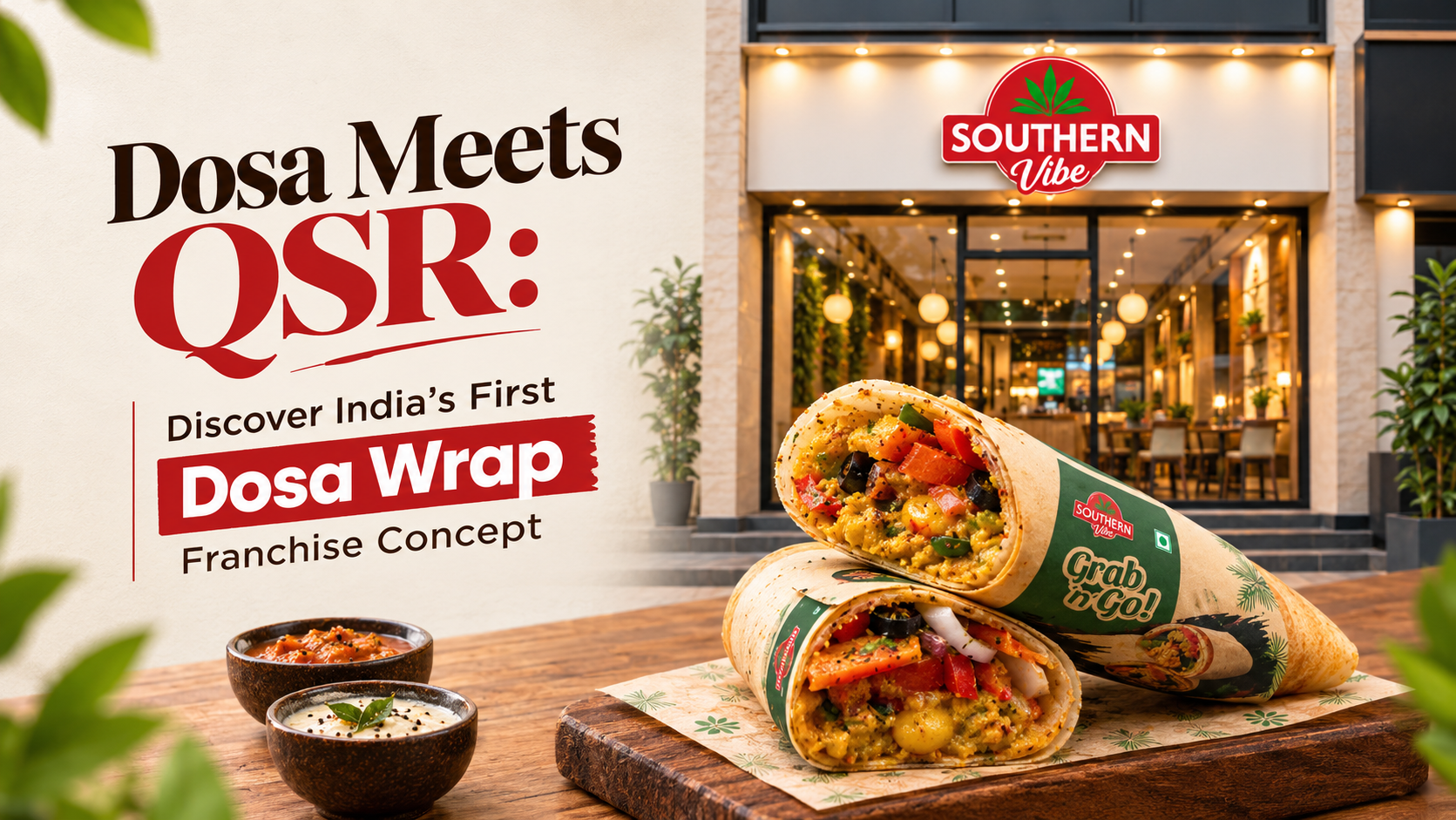
Dosa Meets QSR: Discover India’s First Dosa Wrap Franchise Concept

Dosa Meets QSR: Discover India’s First Dosa Wrap Franchise Concept

The dosa has always been one of India’s most loved South Indian foods. Crispy, versatile and packed with flavour, it has travelled far beyond South India to become a favourite across the country and around the world.

But what happens when this traditional favourite meets the speed, convenience and energy of a modern Quick Service Restaurant (QSR)?

You get a completely new way to enjoy dosa — the Dosa Wrap.

Introducing Southern Vibe, a modern South Indian café concept from the Sankalp Group that brings traditional South Indian flavours into a contemporary, fast-paced dining experience. Its menu combines classic favourites with innovative offerings such as Dosa Wraps, designed for customers who want authentic flavours in a convenient format.

From Traditional Dosa to Dosa Wrap

For generations, dosa has been enjoyed as a sit-down meal with sambhar, chutneys and a variety of fillings. While the flavours remain timeless, today’s consumers are increasingly looking for food that fits into their busy lifestyles.

That is where the India’s first Dosa Wrap concept creates a fresh opportunity.

Instead of serving dosa only as a conventional plated dish, Southern Vibe reimagines it in a wrap-style format that is convenient to pick up, enjoy and take on the go.

It brings together:

  • The familiar taste of South Indian dosa
  • Innovative fillings and combinations
  • A convenient wrap format
  • Faster QSR-style service
  • A contemporary café experience
  • Freshly prepared food


View this post on Instagram


A post shared by Jitendra Popat | Food & Travel Influencer (@ahmedabad_food_trend)


The result is a product that connects traditional Indian food with modern eating habits.

Why Dosa Works So Well as a QSR Concept

The QSR industry is built around three important consumer expectations: speed, convenience and consistency.

South Indian food naturally fits many of these requirements. Dosas, idlis, vadas and other favourites can be prepared and served quickly while maintaining their distinctive flavours.

Southern Vibe takes this idea further by creating a café environment designed around quick meals, takeaway, office lunches, breakfast and evening snacking. The brand describes its format as combining authentic South Indian flavours with speed, consistency and a modern café experience.

This makes the concept relevant to a wide range of customers — from students and young professionals to families and food enthusiasts.

What Makes the Southern Vibe Concept Different?

Southern Vibe isn’t positioned as just another traditional South Indian restaurant.

It brings together heritage + innovation + convenience.

The concept features traditional favourites such as dosas, idlis and vadas alongside Dosa Wraps and other café-friendly offerings. The experience is designed for customers who want the flavours they know in a format that fits today’s lifestyle.

1. Traditional Flavours, Modern Format

The foundation remains authentic South Indian food, but the presentation and experience are designed for today’s consumer.

2. Dosa Wrap Innovation

The Dosa Wrap gives one of India’s most recognisable foods a convenient, portable format — making it suitable for takeaway, quick lunches and on-the-go consumption.

3. Café-Style Experience

Southern Vibe combines food with a contemporary café environment, making it suitable for everything from a morning breakfast to an evening snack with friends.

4. Speed Without Compromising Taste

The concept focuses on freshly prepared food, hygiene and consistency while maintaining the convenience expected from a QSR.


A New Opportunity in the South Indian Food Franchise Market

The growth of modern South Indian QSR concepts reflects changing consumer expectations. Traditional dishes are increasingly being adapted into formats that work across high streets, cafés, food courts and other high-footfall environments.

Southern Vibe brings this approach into a franchise model backed by the Sankalp Group.

According to the brand’s franchise information, Southern Vibe requires an estimated investment of ₹30 – 35 lakh, with a stated space requirement of 700 – 800 sq. ft. The brand also states an expected ROI timeline of 12–15 months, subject to business performance and other factors.
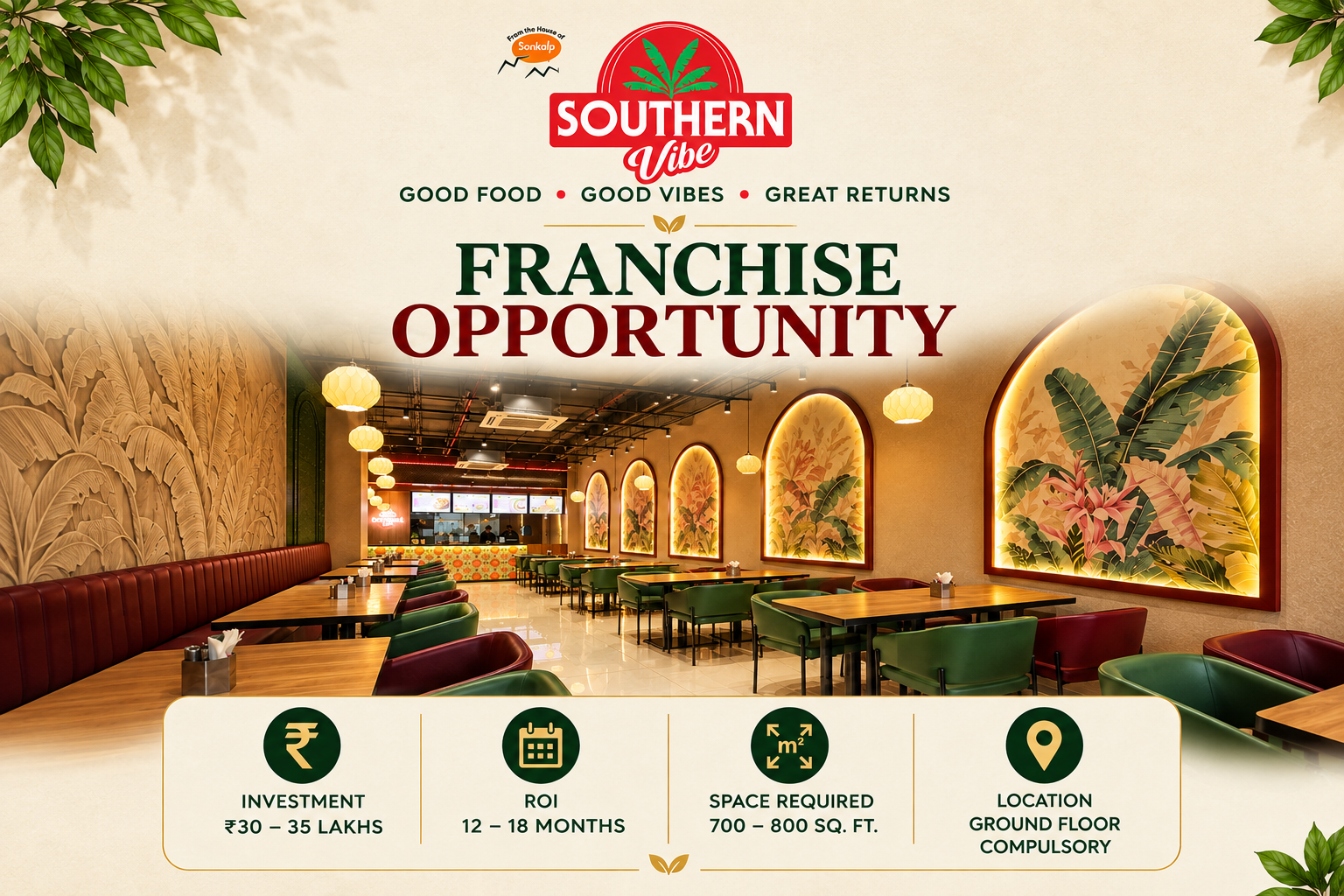
Built on the Sankalp Group Legacy

Southern Vibe is part of the Sankalp Group, which traces its restaurant journey back to a speciality restaurant established in Ahmedabad in 1980. The group states that it has grown to 250+ operating restaurants globally across its businesses.

This gives the Southern Vibe concept an established hospitality foundation while allowing it to explore a younger, more contemporary café and QSR format.

The franchise model includes support across areas such as:

  • Business setup
  • Location evaluation
  • Café layout
  • Kitchen setup
  • Equipment selection
  • Staff recruitment
  • Training
  • Marketing
  • Operational guidance
  • Vendor assistance

The brand describes the franchise journey as a structured process from initial enquiry and location approval through setup, training and grand opening.

Why the Dosa Wrap Could Be the Next Big QSR Format

Food trends increasingly move toward products that are recognisable, convenient and easy to customise.

The Dosa Wrap brings these characteristics together.

It takes something customers already know and love — dosa — and gives it a format that can work naturally within a fast-casual or QSR environment.

Imagine grabbing a Dosa Wrap during your office lunch break, enjoying one between classes, ordering it for takeaway or sharing different varieties with friends.

That’s the idea behind Southern Vibe: make South Indian food fit effortlessly into modern lifestyles without losing its identity.

More Than a Dosa. A New South Indian Experience.

Southern Vibe’s concept goes beyond one product.

Alongside Dosa Wraps, the café format includes dosas, idlis, vadas, uttapams, parathas, rice dishes, beverages and other café favourites.

This creates a menu designed to serve different occasions throughout the day — from breakfast and quick office meals to evening snacks and casual dining.

The result is a modern South Indian café concept where traditional recipes meet contemporary café culture.

Start Your Southern Vibe Franchise Journey

The Indian QSR market continues to create opportunities for food concepts that can combine strong product identity with convenience and operational efficiency.

Southern Vibe brings a fresh proposition to this space — Dosa Meets QSR.

With its innovative Dosa Wrap concept, modern café format and backing from the Sankalp Group, the brand is creating a new way for customers to experience South Indian food.

For entrepreneurs looking to enter the food and beverage sector, Southern Vibe offers a franchise opportunity built around a contemporary South Indian café model.

Traditional at heart. Modern in experience. Convenient by design.


FAQs

What is a QSR franchise?
A QSR (Quick Service Restaurant) franchise allows an entrepreneur to operate a food and beverage outlet under an established brand using its business model, brand identity, menu, operating systems, and support structure.
The QSR sector offers opportunities supported by growing demand for convenient, affordable, and standardized food experiences. A franchise can also provide access to an established brand, standardized operating processes, training, marketing support, and a tested business format.
A QSR franchise can be profitable, but profitability depends on several factors, including location, customer demand, rent, food costs, staffing, pricing, operational efficiency, and sales performance. Investors should evaluate the complete unit economics before making a decision.
The investment varies depending on the brand, outlet format, location, size, interiors, kitchen equipment, franchise fees, and working capital requirements. Prospective franchisees should request a detailed investment breakup from the franchisor.
Important factors include brand reputation, menu appeal, investment requirement, franchise fees and royalties, location suitability, supply chain, training, marketing support, operational systems, scalability, and the franchisor’s track record.
Location is one of the most important factors in QSR performance. High-footfall areas, commercial zones, residential clusters, malls, food courts, educational hubs, and other locations with strong target-customer traffic may offer better opportunities, depending on the concept.
Yes. QSR concepts can potentially work in Tier 2 and Tier 3 cities when the brand, menu, pricing, outlet format, and location are aligned with local consumer demand. Market research and location assessment are important before investing.